Fix Drainage Problems on Steep Asheville Properties
To fix drainage problems on steep Asheville properties, you must redirect runoff using a combination of French drains, swales, and retaining walls. Effective solutions involve managing water velocity and soil saturation to prevent erosion and foundation damage, ensuring water is safely channeled away from your home’s structural footprint.
What causes drainage problems on steep Asheville properties?
If you live in Asheville, NC , you already know that our topography is as challenging as it is beautiful. The primary cause of drainage issues on steep properties is the combination of high-velocity surface runoff and the region's specific soil composition. When heavy rain hits the Blue Ridge Mountains, gravity takes over. On a flat lot, water has time to soak into the ground. On a steep slope, however, water gains momentum as it travels downhill, stripping away topsoil and creating gullies.
Another significant factor is the "red clay" common in Western North Carolina. This dense soil has low permeability, meaning it doesn’t absorb water quickly. During a typical mountain downpour, the surface layer of soil becomes saturated almost instantly, causing the remaining water to sheet across the surface. When this volume of water hits your home's foundation or pools in your backyard in Candler, NC or Leicester, NC , it can lead to hydrostatic pressure, basement leaks, and even structural shifts.
Finally, human intervention—like building a driveway or a home—disturbs natural drainage patterns. Without professional excavation & grading , these new structures act as dams or funnels, inadvertently directing thousands of gallons of water toward areas that weren't designed to handle it.
Why is hillside water management critical in WNC?
In Western North Carolina, managing water isn't just about keeping your feet dry; it’s about protecting your biggest investment. On a steep property, uncontrolled water is an existential threat to your home's stability. When water saturates the soil on a slope, it increases the weight of that soil significantly. This added weight, combined with the loss of friction between soil layers, is what leads to the landslides and slope failures we often hear about in the news.
Furthermore, if you are planning to hire a concrete contractor for a new garage or home addition, the drainage must be addressed first. A foundation is only as strong as the ground beneath it. If water is allowed to pool around your footings, it can wash away the supporting soil (undermining) or cause the concrete to crack due to uneven settling. Proactive drainage management also ensures compliance with local building codes, which are particularly strict regarding runoff management in mountain communities to prevent your water from damaging a neighbor’s property downhill.
5 Effective ways to fix drainage problems on steep properties
Addressing a sloped lot requires a multi-layered approach. You cannot simply block the water; you must guide it. Here are the five most effective methods used by professionals in the Asheville area:
- Installing French Drains: A classic solution involving a perforated pipe buried in a gravel-filled trench that redirects groundwater.
- Constructing Swales: Shallow, wide ditches lined with grass or rocks that catch surface runoff and slow it down.
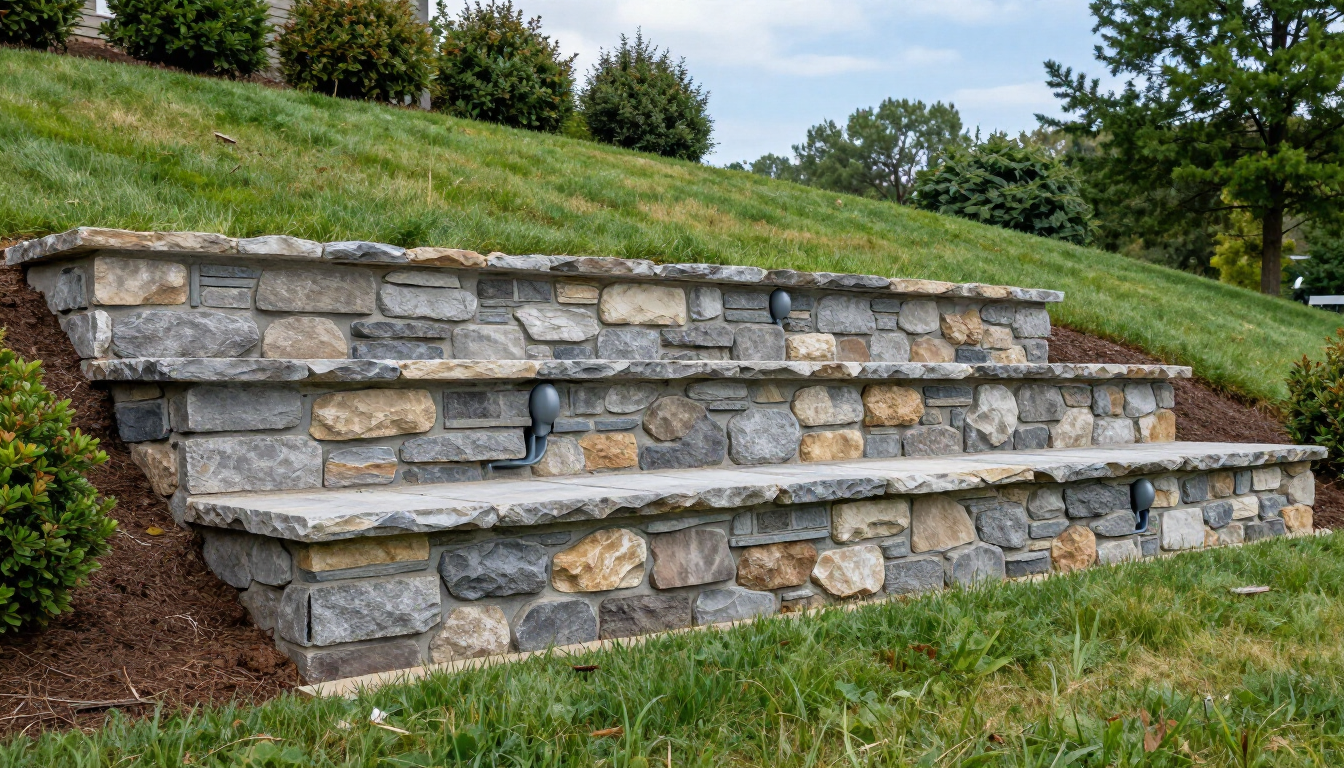
- Building Retaining Walls: These structures level out sections of the slope, reducing the water's velocity and providing structural support.
- Creating Rain Gardens: Depressions planted with native WNC vegetation that absorb and filter water naturally.
- Using Terracing: Breaking a long, steep slope into several shorter, flatter "steps" to manage gravity's pull on water.
Let’s dive deeper into these. A French drain is often the "workhorse" of residential drainage. It is particularly effective for properties in areas like West Asheville where older homes may have foundation drainage that has failed over time. By placing a French drain at the top of a slope or around the perimeter of a house, you create a path of least resistance for water, leading it to a safe discharge point like a dry well or a municipal storm drain.
Swales, on the other hand, are excellent for managing large volumes of surface water. A "dry creek bed" is a popular version of a swale in Asheville because it combines functionality with mountain aesthetics. By lining a swale with river stones of varying sizes, you create a beautiful landscape feature that also shatters the energy of rushing water, preventing it from carving out a trench in your lawn.
How do French drains work on sloped land?
On a steep property, a French drain works a bit differently than it does on a flat suburban lot. The goal on a slope is to intercept "subsurface" water—the water traveling through the soil—before it reaches your foundation. On a hillside, water doesn't just move down; it moves sideways through the soil layers.
To install a French drain on a slope, a trench is dug horizontally across the hillside (perpendicular to the flow of water). The trench is lined with filter fabric to prevent the Asheville clay from clogging the system. A perforated pipe is then placed at the bottom, surrounded by clean, washed stone. As water moves through the hillside, it drops into the gravel trench and enters the pipe. Because the pipe is smooth and slanted toward a discharge point, the water moves much faster through the drain than it ever could through the soil, effectively "drying out" the slope below the drain.
This is a critical component for any property undergoing home remodeling that involves expanding a footprint into a hillside. Without this interception, the new walls of your home essentially become a dam for all that underground mountain water.
Benefits of Professional Grading
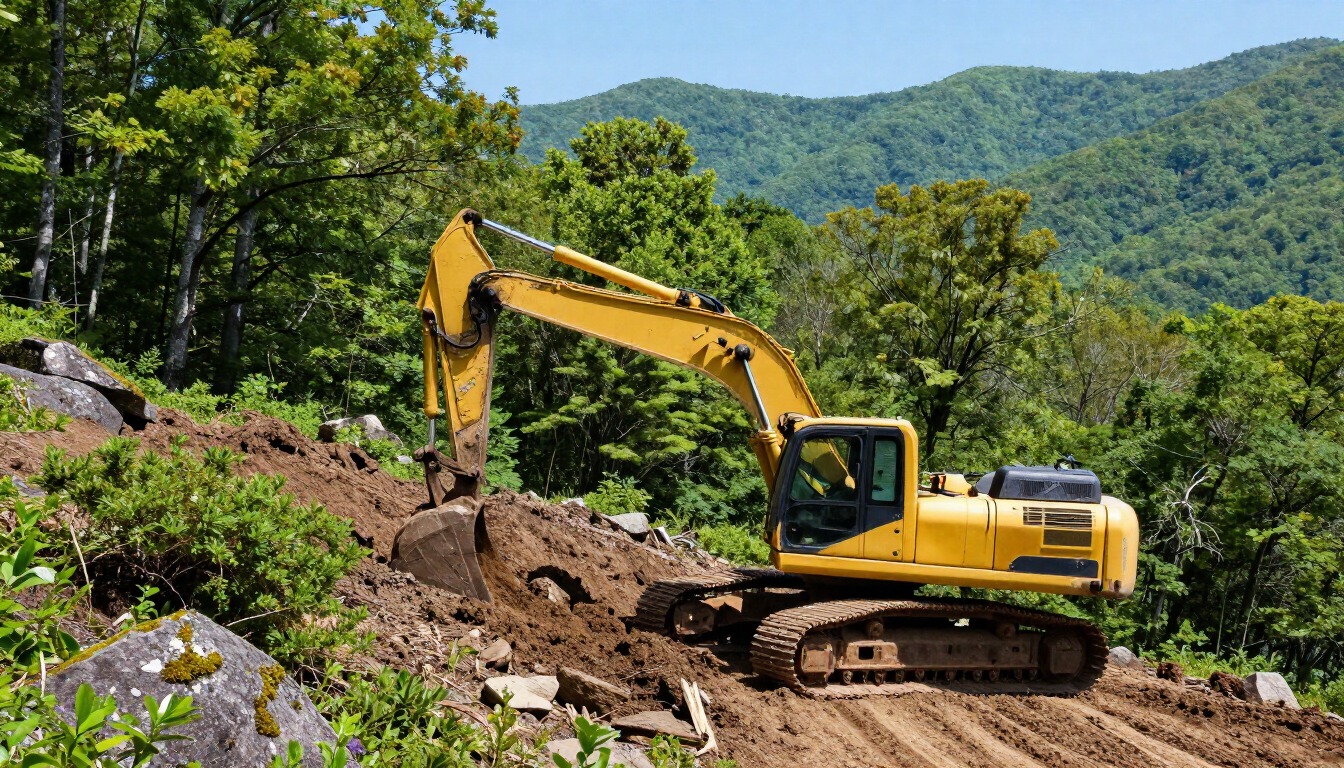
While DIY solutions like rain barrels are great for gardening, heavy-duty drainage issues require professional excavation & grading . Professional grading involves more than just moving dirt; it’s an engineering process that calculates the "pitch" of your land. In Asheville, a standard rule of thumb is that the ground should slope away from your home’s foundation at a rate of at least six inches for every ten feet.
When we perform professional grading, we look at the entire ecosystem of your property. This includes identifying natural "low spots" where water naturally wants to collect and ensuring those spots are equipped with catch basins or redirected toward more absorbent areas. Proper grading also ensures that the weight of the soil is distributed correctly, reducing the risk of the "creep" or "slump" that can happen when steep hillsides become over-saturated.
When should you hire a professional for hillside drainage?
If you see any of the following signs on your Asheville, Candler, or Leicester property, it is time to stop the DIY efforts and contact an expert:
- Foundation Cracks: Large horizontal or stair-step cracks in your basement or crawlspace walls.
- Standing Water: Puddles that remain for more than 24 hours after a rainstorm has ended.
- Soil Erosion: Deep channels or "fingers" carved into your hillside by rainwater.
- Tilting Trees or Fences: This is a sign of "slope creep," meaning the entire surface layer of your soil is slowly sliding downhill.
- Efflorescence: A white, powdery substance on your basement walls, which indicates that water is being pushed through the concrete by hydrostatic pressure.
A professional team understands local zoning laws and the specific engineering requirements for WNC's unique terrain. They can handle the heavy machinery needed to move mountain rock and the permitting required to ensure your drainage solution is code-compliant and permanent.
Summary of Fixes for Steep Property Drainage
Fixing drainage problems on steep Asheville properties requires a strategic combination of surface redirection and subsurface interception. By utilizing French drains to catch groundwater, swales to slow surface runoff, and professional grading to ensure water moves away from foundations, homeowners can protect their land from erosion and their homes from structural damage. In the challenging landscape of Western North Carolina, these solutions are not just upgrades—they are essential maintenance for property longevity.
Key Takeaways:
- Intercept early: Use French drains to catch water before it reaches the home.
- Slow the flow: Use swales and terracing to reduce water velocity on slopes.
- Foundation focus: Ensure grading always slopes away from the house at a 5% minimum grade.
- Soil matters: Account for the low permeability of Asheville’s red clay when designing systems.
- Seek expertise: Consult with a specialist in excavation & grading for any significant hillside movement or foundation issues.